Alzheimer’s Researcher Symposium in San Francisco: Imaging and Biomarkers


The symposium continues with a session focusing on research in the area of imaging and biomarkers.
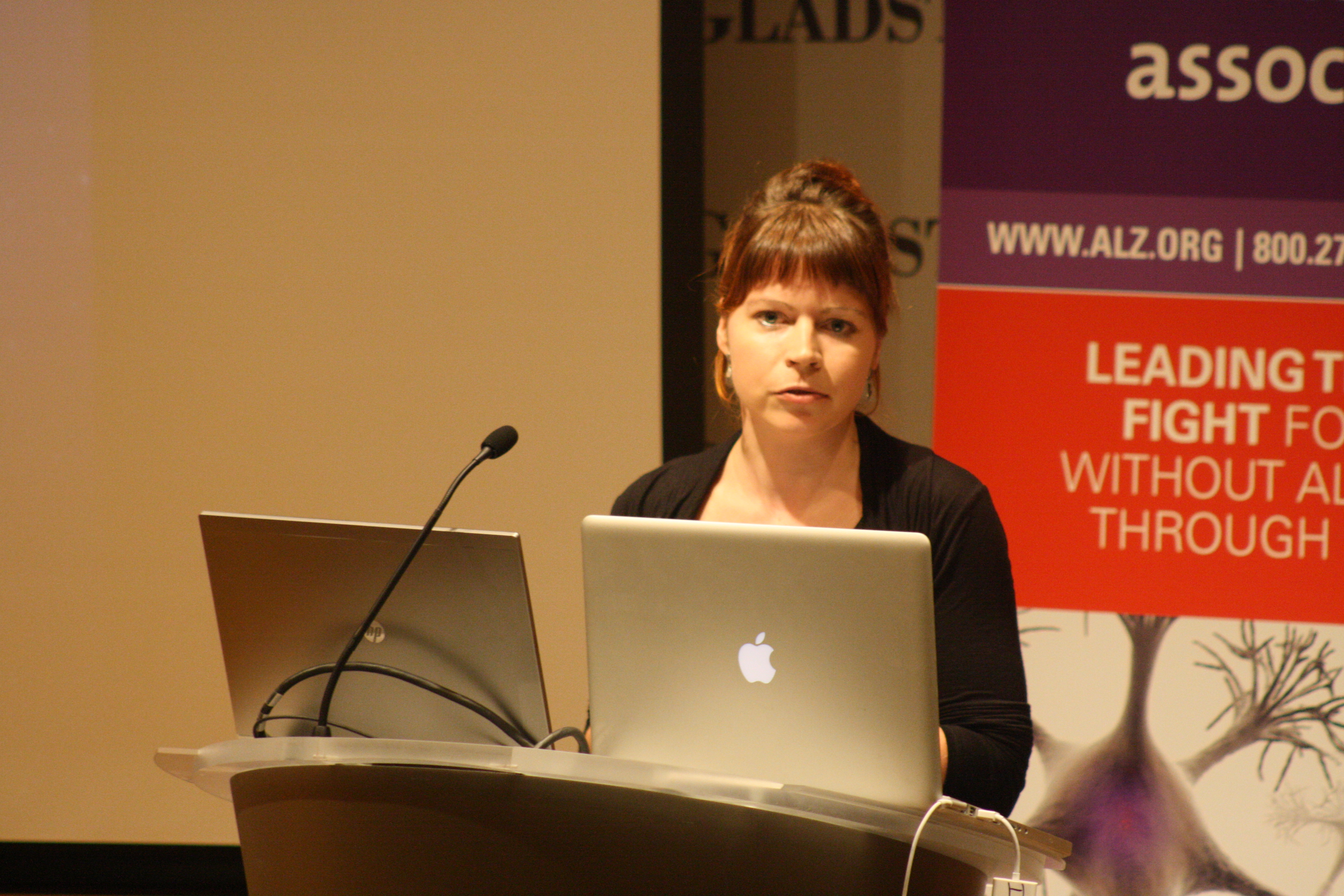
Miranka Wirth, Ph.D., UC Berkeley presents “Signs of functional and structural neurodegeneration within Alzheimer’s disease biomarkers are associated with cognitive decline but not amyloid beda pathology in asymptomatic elderly individuals.
The first presenter was Dr. Miranka Wirth who spoke about neuroimaging biomarkers of Alzheimer’s disease. They hypotheses of this study is that 1.) the people in the early stages of Alzheimer’s with neurodegeneration should be A-beta positive and 2.) Neurodegeneration should be related to preclinical cognitive decline. Her lab measured Alzheimer’s pathology using four biomarkters: A-beta deposition, neuronal dysfunction, and neuronal atrophy (by measuring cortical thickness and hippocampal volume).
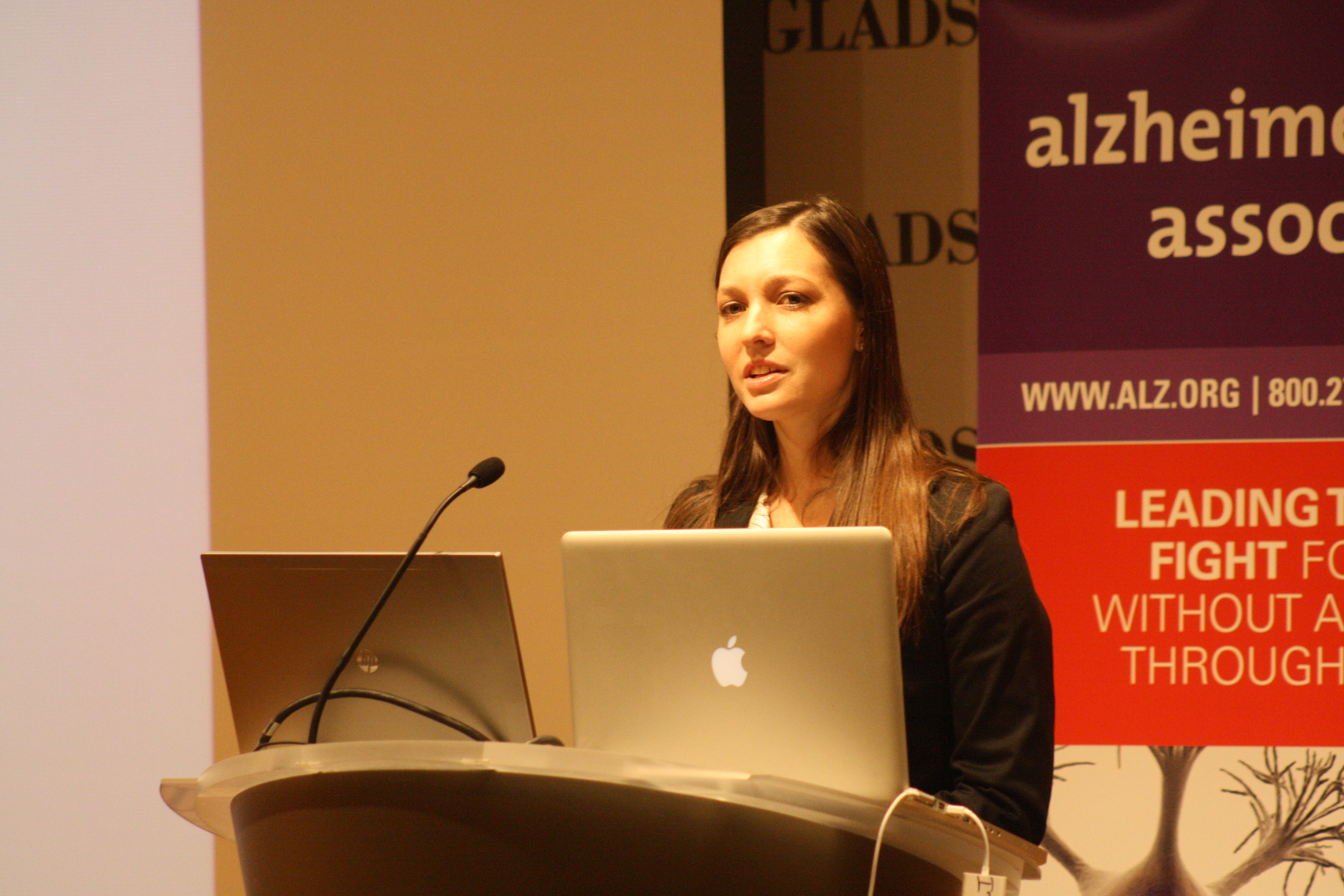
Michelle James, Ph.D., Stanford University presents “PET Imaging of AD Mouse Modesl: in search of translatable techniques for therapy monitoring.”
Next was a presentation from Dr. Michelle James who talked about some preliminary data out of her lab on molecular imaging. Molecular imaging could lead to early detection of Alzheimer’s disease and a greater understand of disease mechanisms. We know Alzheimer’s starts before symptoms are evident – which means it’s difficult to treat the disease because there’s already a lot of degeneration once the disease is finally identified. The existing biomarkers for Alzheimer’s have limitations so we need more. Dr. James talked about what an ideal Alzheimer’s biomarker would look like: it would help with early detection; it would be sensitive to and accurate in identifying Alzheimer’s disease specifically; it would enable us to monitor the disease; it would have predictive power; allow for repeated measurements; be non invasive and cost effective; be easy to perform; have a read out that is easy to read and interpret; and should be useful for therapy monitoring.
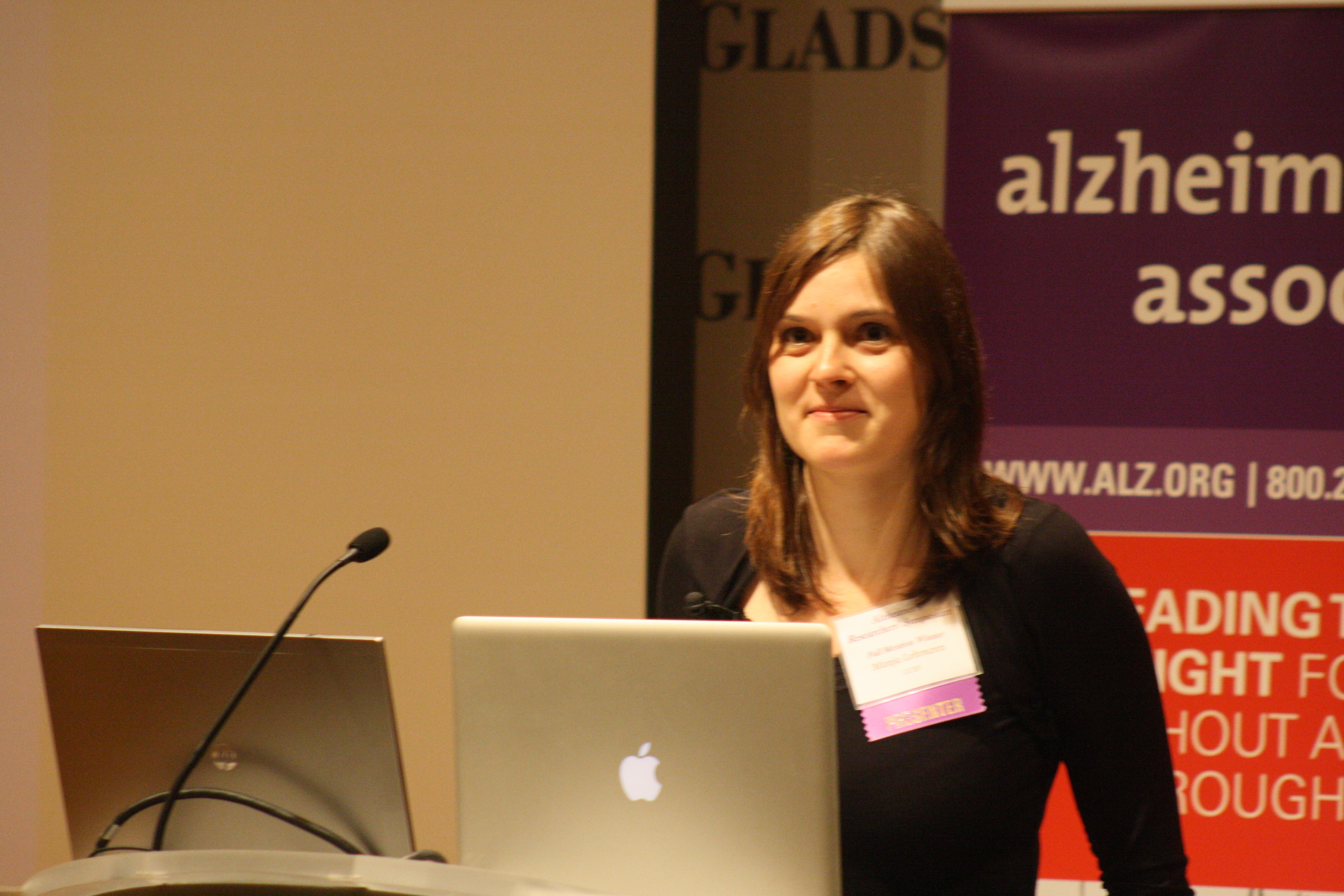
Manja Lehmann, Ph.D., UCSF presents “Diverging patterns of amyloid and hypometabolism in clinical variants of Alzheimer’s disease”
Last, Dr. Manja Lehmann covered her area of research, which compared a group of Alzheimer’s subjects and healthy controls. The Alzheimer’s group was divided into three groups: early onset with language deficits, early onset with visual deficits and early onset with no significant language or visual deficits. Imaging was performed on all the subjects and the lab conducted an correlation analysis of the data on biomarkers to identify patterns and trends across the groups.
Next session (post-lunch!) will cover research in the area of cellular and molecular neuroscience.