The Santa Cruz Education Conference Concludes: The Positive Power of Music as a Therapy


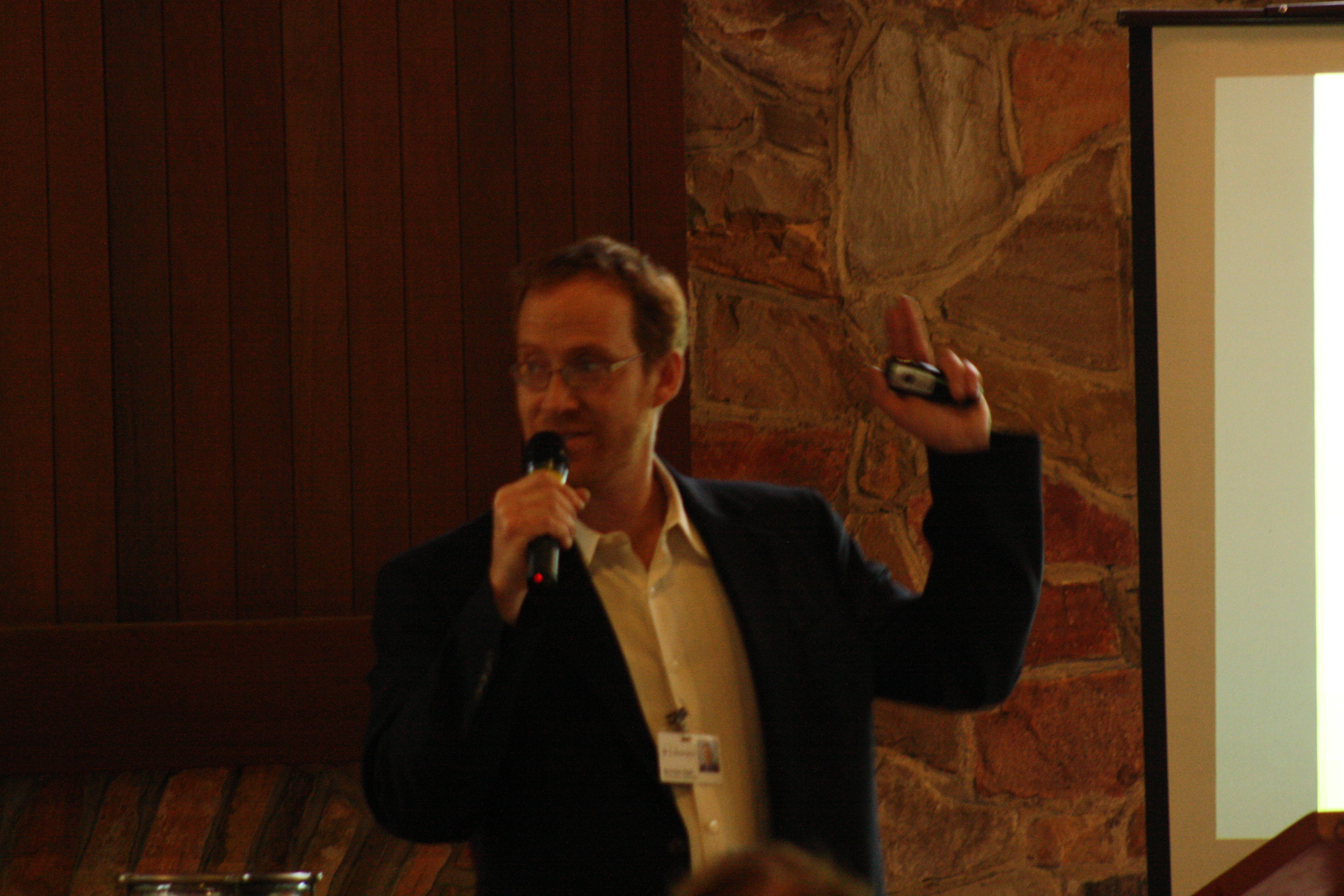
Nicholas Sager, recreational therapist, discusses music therapy for individuals with Alzheimer's
Nicholas Sager, recreation specialist with On Lok Lifeways joined us for a session about music as therapy for individuals with Alzheimer’s.
The transformative power of music has been recognized throughout the ages and music as therapy has a long history. Music can promote wellness, reduce stress, alleviate pain, express feelings, enhance memory, improve communication and build community.
“We don’t just respond to music with our emotions, but we respond physiologically, whether we’re aware of it or not,” he said. “We can find music that helps us smile and relax, to block out noises, to motivate us.” Listening, seeing and making music stimulates the whole brain, including areas affected by Alzheimer’s and other forms of dementia.
Research on music therapy has show that it helps create improved cognitive skills, improved psychosocial skills and reduced problematic behavior symptoms. In addition, it helps improveme mobility, strength, endurance, timing and coordination of fine motor movements, speech and language.
“When you do music therapy, you have all the tools of music available to you,” said Nicholas. “Rhythm melody tone harmony – each one evokes very specific things in our bodies, our emotions and creativity.”
When trying music therapy, Nicholas suggests focusing on melodies within the vocal range and face-to-face interaction. Experiment with different types of music – recorded music, live music, online/digital music, cultural performances, spiritual music, inter-generational and drumming/dance/movement.
“We can’t cure Alzheimer’s with music but the use of music therapy can result in very beneficial effects that lead to enhanced quality of life for the person with Alzheimer’s and the caregiver,” he said. “When you can find the right song or right mood to connect with somebody, it will be transformative for the whole group.”
More helpful resources related to this article
Meaningful activities: Music, art and more
Memories in the Making Art Therapy










Interesting article! We’ve definitely noticed our Alzheimer’s clients’ moods shift when our caregivers play music for them. Hearing music seems so simple, yet it can have such a profound impact.
Michelle Rogers, Home Instead Senior Care (South Peninsula)