Empowering native communities with knowledge and care for dementia


November is Native American and Alaskan Native Heritage Month. Valerie Bill grew up thinking memory loss was normal aging, only later learning it was dementia after both her mother and mother-in-law showed signs. Now working at the Fallon Tribal Health Center, she educates Native American communities in Northern Nevada where misconceptions and limited healthcare access make dementia harder to address. Valerie promotes early detection, lifestyle changes, and open conversations to support families and reduce stigma.
Missing the signs
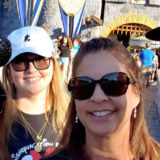
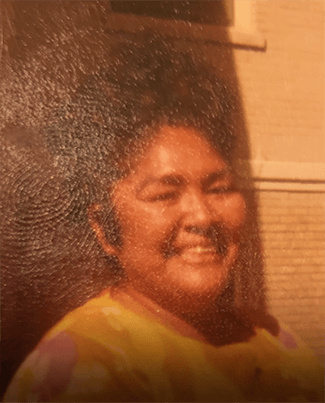
Valerie Bill of the Fallon Paiute-Shoshone tribe was the youngest daughter of 12 siblings. She watched as her mother forgot things or would think she was a young woman again. “Being kids we’d play around,” said Valerie. “We’d say oh she’s got her old memory going on again. She’s not remembering things.” Valerie and her family had never heard of dementia and assumed this was just what happened as people got older. Valerie’s mother was never diagnosed and died of heart problems in the early 2000s.
When Valerie was older, she had a second brush with dementia. Her mother-in-law claimed to see strangers in the field at their ranch and that the neighbors (who were family members) were stealing things. Valerie knew this wasn’t normal but was still unsure of what it could be. It wasn’t until several years later she learned it was most likely dementia.
Natives and dementia
One in six Native Americans / Alaska Native adults aged 45 and older reports experiencing memory or thinking problems that might be a sign of dementia. More than half (53%) of Native Americans believe that significant memory or cognitive losses are a normal part of aging.
Native Americans are more likely to develop Alzheimer’s or other forms of dementia than White or Asian Americans. At the same time, American Indians overall have less access to healthcare and health services and are less likely to be diagnosed once they show symptoms, creating unique challenges in addressing Alzheimer’s and other dementias.
Due to decades of mistrust of the medical field there are knowledge gaps, especially about caregiving and disease risk, among Native Americans. There are also different perceptions of memory and dementia. Some perceive dementia as a normal part of aging or accompanying the transition to the next world. Others gauge memory by the ability to recollect the distant past, while Alzheimer’s typically first affects the most recent memories.
Learning about dementia
Today, Valerie works for the Fallon Tribal Health Center (FTHC). The FTHC offers healthcare services to members of the Fallon Paiute-Shoshone Tribe and serves as a vital healthcare resource for Native Americans in Churchill County, Nevada.
Valerie was first introduced to Alzheimer’s and dementia when her work asked her to attend a dementia-friendly training in Reno, Nevada. “That’s what started my interest [in the disease]. I need to know about this,” said Valerie. “I got to listen to the training and see people in [different] stages. I went home and told my husband, ‘This is what your mom is going through.’ He said, ‘You really think so?’ [And I said,] ‘I really do.’”
From there, while Valerie’s mother-in-law was never formally diagnosed, Valerie and her husband changed the way they provided care. Valerie’s mother-in-law died in the 2020s.
Working with the Association
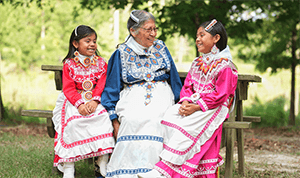
FTHC works with the local Alzheimer’s Association office based out of Reno. Staff from the Association share information on the disease, attend health fairs, and provide education programs on the disease.
“[Presentations] give people an opportunity to ask questions,” said Valerie. “People shy away. They don’t want to talk about it. It’s like diabetes, we don’t want to know or hear about it because then you expect it. Back in the day we never talked about it. It’s taboo so you don’t bring it upon you. Nobody was diagnosed with Alzheimer’s, just like diabetes.
“Charae [a family care specialist at the Alzheimer’s Association] is our go to girl. She did our health fair with us and did a presentation on dementia. I see it as something we need to talk about. Natives don’t like to talk about that. I see more people wanting to know [about the disease], asking questions. We want to stay active with [the Association].”
Brain health
Positive, everyday actions can make a difference in brain health, even lowering the risk of cognitive decline and possibly Alzheimer’s and dementia. Through her work at FTHC, Valerie has seen first-hand the changes that can be made by lifestyle choices.
“I just see the importance of interaction, the socializing, engaging with visits,” said Valerie. “We got to take them down to exercise. You walk, you exercise, you eat right, you control your diabetes, your high blood pressure, you stay active, play brain games, do crafts, whatever it takes to keep your mind going, that’s what you need to do.
“I see them light up when family talks to them. Old memories of school days or a song comes on. We have music on when we do arts and crafts, play memory games, scrap booking, just sit and talk, that’s what they want.”
Make a doctor’s appointment
Valerie wants her fellow Native Americans to know that if they’re concerned about their memory or don’t feel good in general, they should make a doctor’s appointment. If it turns out there is a dementia diagnosis, then they can help you get resources in place to help you and your loved ones be more successful in managing care.
“We want to know what’s going on,” said Valerie. “Early detection is best. Who is going to be the power of medical attorney? Do you have a walk-in shower? Do you have medical equipment? Do you need rails down the hall? We’re making sure the home is safe. If we can give you resources, then that’s what we want to do. That how we work, that’s the pathway to care.
If you’re worried you may have dementia visit alz.org/10signs to see if you have any of the 10 warning signs and symptoms. If you notice any of them, don’t ignore them. Schedule an appointment with your doctor.
For more information on Alzheimer’s in the Native American community visit alz.org/nativeamericans.