The Power of Lifestyle Change: Lessons from U.S. POINTER study


Evelyn Joseph, a participant of the U.S. POINTER study, shares how structured guidance on nutrition, exercise, and cognitive training helped her lose weight, improve her heart and brain health, and discover how much lifestyle can impact aging. Along the way, she also learned to recognize dementia symptoms—knowledge that helped her understand her husband’s late-stage diagnosis. Evelyn’s story shows how small, consistent changes can lead to powerful improvements in overall well‑being.

A commitment to research
Eveyln Joseph loves research. Having worked in the research field in her 20s, she has always been interested in learning more, especially when it comes to cardiovascular health. When a postcard came in the mail looking for people who would be interested in participating in the U.S. POINTER study it was an easy decision for Eveyln to make saying, “If they have something new coming out, I want to help!”
The Alzheimer’s Association U.S. Study to Protect Brain Health Through Lifestyle Intervention to Reduce Risk (U.S. POINTER) was a two-year clinical trial to evaluate whether lifestyle interventions that target many risk factors protect cognitive function in older adults who are at increased risk for cognitive decline.
Over 2,000 older adults (age 60-79) with an increased risk for cognitive decline were followed for two years. Participants were randomly assigned to either a self-guided or structured lifestyle program. Both interventions focused on increasing physical activity, improving nutrition, cognitive and social challenge and health monitoring, but differed in structure, accountability and support provided.
Improving her overall health
Everlyn was placed in the structured group. Participants in this group attended facilitated meetings over nearly two years and were provided with a prescribed activity program with measurable goals for: exercise, diet, cognitive training and encouragement to engage in other intellectual and social activities, and regular health review and goal setting with a study.
As a self-starter, Evelyn was disappointed with her placement in the structured group. However, after completing the program, she was glad she’d had the accountability because she knew she would have had a harder time staying on track independently.
“When I got to the study I found out there was so much I didn’t know and wasn’t doing right,” said Eveyln. “I thought, ‘I am a child of the 60s, I wasn’t eating chips and pizza and desserts. I didn’t drink sodas.’ I didn’t realize how bad my eating habits were.”
Within two years, Eveyln lost 25 lbs and improved her health and cognition. “I followed the plan and it worked wonders on how I felt,” said Evelyn. “My blood pressure and cholesterol went down. My doctor said, ‘You have a better heart than I’ve seen in an 82-year-old person. You’re in good shape.’”
All of this, Evelyn attributes to the U.S. POINTER study. “It forced me to do more and the more I did the better I felt. I think every individual 70 or older should follow the U.S. POINTER study.”
Brain health “recipe”
Results from the U.S. POINTER clinical trial found that by making certain lifestyle interventions you can improve cognition in older adults at risk for cognitive decline. The structured group in U.S. POINTER study followed this “recipe”:
- Physical exercise: 30-35 minutes of moderate-to-intense aerobic activity four times a week, plus strength and flexibility exercises twice a week.
- Cognitive exercise: Computer-based brain training program three times a week for 30 minutes, plus regular engagement in other intellectually challenging and social activities.
- Nutrition: Adherence to the MIND diet, which emphasizes dark leafy greens, berries, nuts, whole grains, olive oil and fish, and limits sugar and unhealthy fats.
Little changes; big results
Eveyln was doing some things right in terms of her diet and exercise routine prior to joining the study. Here are some changes she made to be successful:
Diet:
- Eating sweets less often, aiming for only four sweet treats a week
- Cutting out treats that were less important to her like chips and pretzels
- Swapping foods for healthier versions, like eating fudge bars instead of ice cream
- Keeping tempting foods like chocolate chip cookies hidden or out of the house
- Eating appropriate portion sizes of healthy foods
- Using a smaller plate to keep in line with her portion sizes and trick her brain into thinking she’s eating more
Exercise:
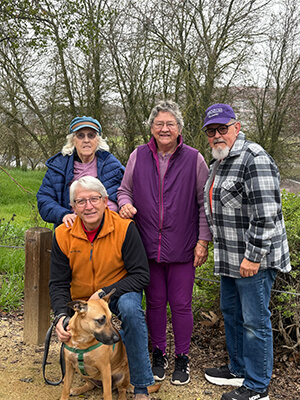
- Joined a senior center club and attended exercise programs twice a week that focus on both aerobic activity and strength training
- Met up with friends she made from the study and went on 60–90-minute walks once a week
Brain games
- Played games on brainHQ an online platform that offers exercises that help improve cognitive performance
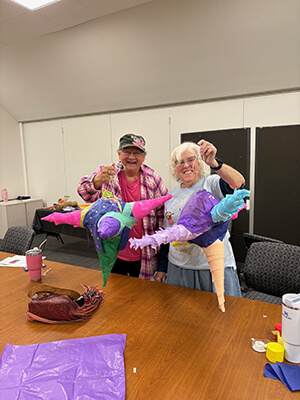
- Added new ways to challenge her brain outside of her regular puzzles
- Actively tried to learn new things, like a new language
Learning about dementia
While Evelyn was learning how to improve her cognitive health, she was also learning about dementia, including the 10 Warning Signs. It was because of this information, Evelyn realized that many of the things her husband had been doing over the last several years matched these symptoms.
Unfortunately, by the time Evelyn learned of the disease, her husband was already in the late stages of the disease. He died while she was actively participating in the study. “It’s so important to learn about [dementia],” said Evelyn. “I didn’t know [anything about the disease]. Ignorance is terrible.”
One step at a time
Thinking about following the US POINTER recipe? Eveyln encourages you to take one step at a time and make small changes. “Think of what you can do instead of what you can’t,” starts Evelyn. “Don’t drink all those coffees with sugar, drink coffee with half and half. Go out and walk (I don’t have money for a gym). Get a [fitness tracker]. Learn something new, you’re opening different portals in your brain.
“[In the beginning] I was frustrated. There was so much I didn’t know and wasn’t doing right. Every time I learned about the brain, I realized [how little I knew]. The U.S. POINTER study has helped me so much. The value of blueberries [in the brain] – they will be in my life forever! It’s been an adventure and I just want to keep going.”
Learn more about the U.S. POINTER study at alz.org/us-pointer.
For more information on dementia visit our website at alz.org or call our 24/7 Helpline at 800.272.3900.